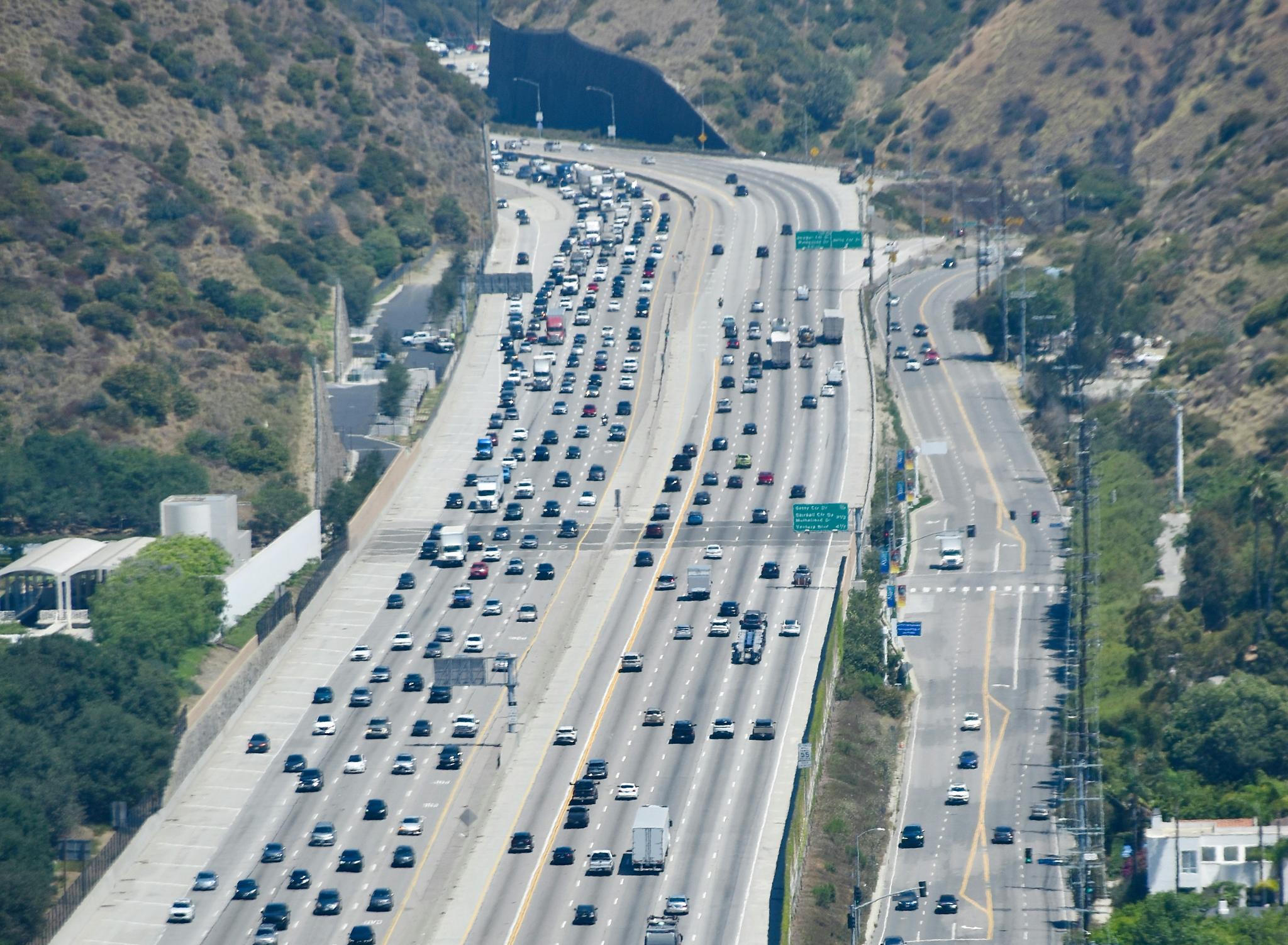
President Donald Trump announced on December 3, 2025, that his administration would roll back stringent fuel economy requirements for automobiles established under the previous administration. Speaking from the Oval Office, Trump described the move as a relief for the auto industry. He was joined by executives from major manufacturers, including the CEOs of Ford Motor Company and Stellantis.
The Corporate Average Fuel Economy (CAFE) standards originated in 1975 following the Arab oil embargo. Congress enacted the regulations to reduce energy consumption by improving how far cars and light trucks travel on each gallon of fuel. The National Highway Traffic Safety Administration sets the targets, while the Environmental Protection Agency calculates compliance based on a manufacturer’s entire fleet of vehicles sold in the United States.
Automakers must achieve a fleet-wide average fuel economy level each model year, with separate targets for passenger cars and light trucks. Manufacturers earn credits for exceeding goals, which they can bank or trade, and face civil penalties for falling short. Over decades, the standards have driven innovations in engine efficiency and vehicle design, gradually raising required averages from about 18 miles per gallon in the late 1970s to higher levels today.
The Biden administration finalized updated CAFE standards in June 2024, mandating annual increases of 2 percent in fuel economy for model years 2027 through 2031. The rules projected a national fleet average of 50.4 miles per gallon by 2031. Trump’s announcement proposes freezing progress at a lower level, aiming for 34.5 miles per gallon by that year.
“We’re officially terminating Joe Biden’s ridiculously burdensome, horrible, actually, CAFE standards that impose expensive restrictions and all sorts of problems — gave all sorts of problems to automakers,” Trump stated during the event. The president also directed officials to revoke California’s longstanding waiver allowing stricter state emissions rules, which had influenced national trends.
For vehicle manufacturers, the changes ease compliance costs estimated in the billions under the prior rules. Companies like Ford and General Motors have lobbied for relief, arguing that rapid efficiency mandates strained resources amid a shift toward electric vehicles. In July 2025, Trump signed the Working Families Tax Cuts Act, which eliminated civil penalties for violating CAFE standards. Automakers may now focus resources on profitable segments, such as trucks and SUVs.
Less pressure to meet aggressive targets also reduces incentives for features like automatic engine start-stop systems, which shut off idling engines to boost mileage but often annoy drivers with their abrupt operation. Automakers adopted the technology widely to earn federal off-cycle credits under prior regulations. The Environmental Protection Agency now proposes rescinding those incentives.
Consumers could see shorter-term benefits in the form of lower sticker prices on new vehicles, as builders face fewer mandates to incorporate costly efficiency features. The National Highway Traffic Safety Administration projects an average reduction of $930 per vehicle. Long-term fuel expenses will rise due to reduced average mileage, with the agency estimating an additional $185 billion in national fuel costs through 2050. Environmental groups warn that weaker standards will increase greenhouse gas emissions, adding about 5 percent more carbon dioxide to the atmosphere over that period, though the administration emphasizes job preservation in manufacturing hubs.
The announcement has also fueled speculation that foreign light vehicles, such as the rugged Toyota Hilux pickup truck, could make their way to American showrooms. Still, a 25 percent light truck import tariff known as the Chicken Tax, stringent safety requirements, and other trade barriers remain unchanged, and industry observers note that persistent economic and regulatory challenges make a U.S. debut unlikely in the near term, at least for the Hilux.
The rollback requires formal rulemaking, with public comments expected before finalization in 2026. California officials have vowed to challenge the waiver revocation in court, citing the state’s authority over air quality. Automakers must now adapt strategies to the evolving federal framework, balancing market demands with regulatory realities.